POWER WITHOUT EXIT IS A NATION WITHOUT A FUTURE
There comes a moment in every nation when the line between survival and collapse is defined by the choices of those in power. Zimbabwe stands at that moment today. The push to extend rule under the current Bill is not merely a legal adjustment. It is a dangerous political experiment whose consequences are already visible to those willing to confront reality.
Even the thought of an attempted coup in response is too grave to contemplate in such a context. History has shown that when constitutional pathways are manipulated, pressure does not disappear. It mutates. It builds. It eventually finds expression in ways that are often uncontrollable and devastating for ordinary citizens.
What is even more telling is that the regional mood is not as supportive as it is often portrayed. Across Southern Africa, there is a quiet but unmistakable discomfort among former liberation movements. Within the African National Congress in South Africa, SWAPO in Namibia, FRELIMO in Mozambique, and Chama Cha Mapinduzi in Tanzania, there is growing unease. While these parties publicly invoke sovereignty to justify non intervention, they understand something that ZANU PF appears determined to ignore. Leadership renewal is not a threat to power. It is the very foundation of its survival.
These movements have adapted. They have evolved. The ANC understands that transitions must happen, including when its current president Cyril Ramaphosa will eventually step aside. FRELIMO has rotated leadership across generations, while SWAPO has managed succession with calculated continuity. Even CCM, despite its authoritarian tendencies, alternates leadership as a means of maintaining internal balance. None of these parties are advocating for regime change in Zimbabwe, yet they cannot reconcile ZANU PF’s logic of stagnation with the risks it creates.
The implications of this Bill are severe and far reaching. It will deepen fractures within ZANU PF itself, intensify political tensions across the country, and trigger cycles of repression and resistance. As the social contract continues to erode, the economy will suffer further decline, and Zimbabwe’s isolation will become more entrenched. This is not a stabilising move. It is a destabilising gamble with national consequences.
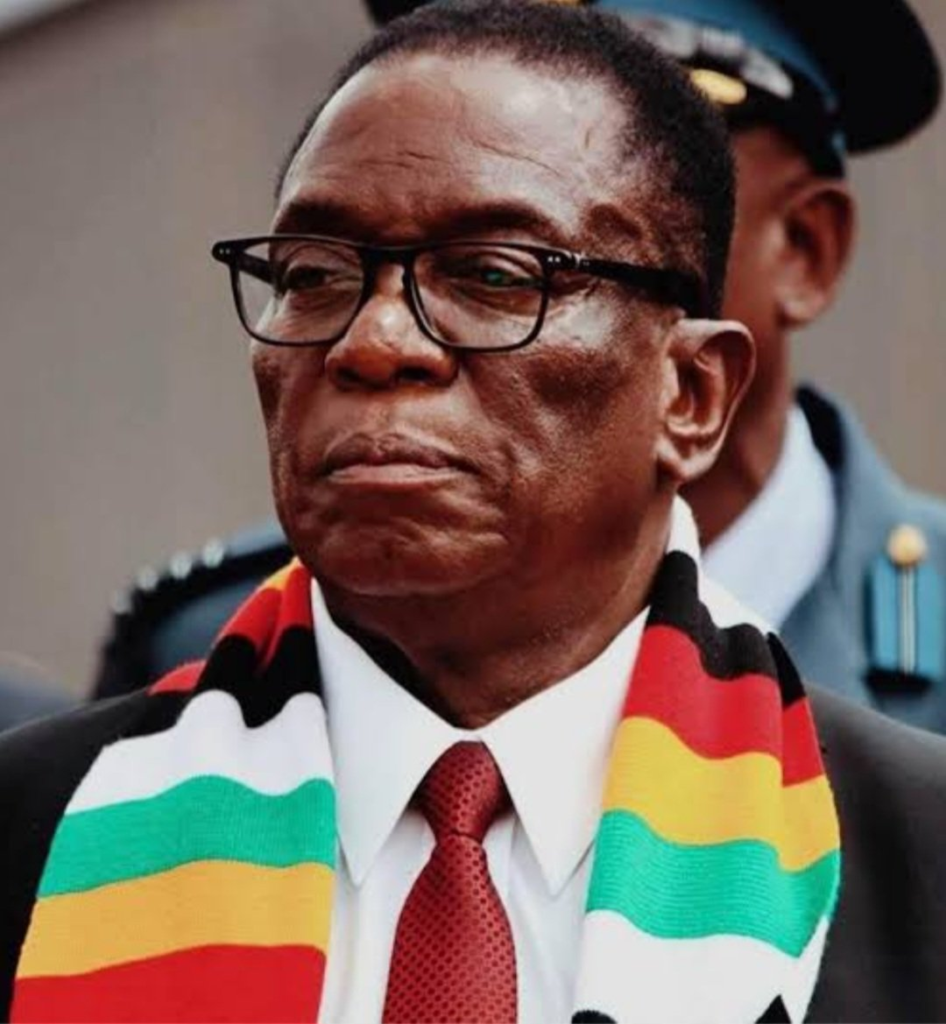
One cannot move from a military coup to what increasingly resembles a constitutional coup and expect a smooth political outcome. Emmerson Mnangagwa is officially 83 years old, though some within his own circles suggest he may be closer to 88. At either age, extending power does not resolve the issue of succession. It amplifies it, pushing the inevitable contest into less predictable and more volatile territory.
Even within the establishment, the warnings are becoming harder to ignore. At a ZANU PF press conference on 20 February 2026, spokesperson Christopher Mutsvangwa openly suggested that Mnangagwa should reflect on the lessons of age and leadership, drawing comparisons with Robert Mugabe. Dr Siphosami Malunga has also cautioned that age can shift power dynamics in ways that no one can fully control. Today a leader may appear dominant and unchallengeable, but tomorrow that perception can collapse with startling speed.
At the heart of this crisis lies Parliament itself. The institution that should act as a safeguard is now positioned as the decisive battleground. ZANU PF does not automatically command a two thirds majority in both Houses. While it dominates the National Assembly, the Senate presents a more complex equation. With 33 out of 80 seats, the party requires 21 additional votes to secure the threshold needed to pass the Bill.
Yet the numbers also reveal a different possibility. Only 27 votes are required to block the Bill. On paper, these could come from the 47 non ZANU PF Senators, including CCC members, traditional leaders, and representatives of persons with disabilities. This creates a theoretical space for resistance, a narrow but critical window where the course of the nation could still be altered.
The question, however, is whether those 27 Senators will hold the line. Political reality suggests otherwise. Parliament has been effectively captured. Traditional leaders often act in partisan ways, and the recall system has been weaponised to enforce compliance rather than accountability. In other countries, recall mechanisms empower citizens and are tightly regulated. In Zimbabwe, they have become instruments of control.
In the end, many Members of Parliament may quietly support an extension, not out of principle, but out of self interest, as it prolongs their own tenure. And therein lies the tragedy. When leaders choose personal survival over national stability, the cost is borne by the people. Zimbabwe deserves renewal, not indefinite stagnation.