THE 2030 POWER GRAB AND THE BETRAYAL OF ONE MAN ONE VOTE
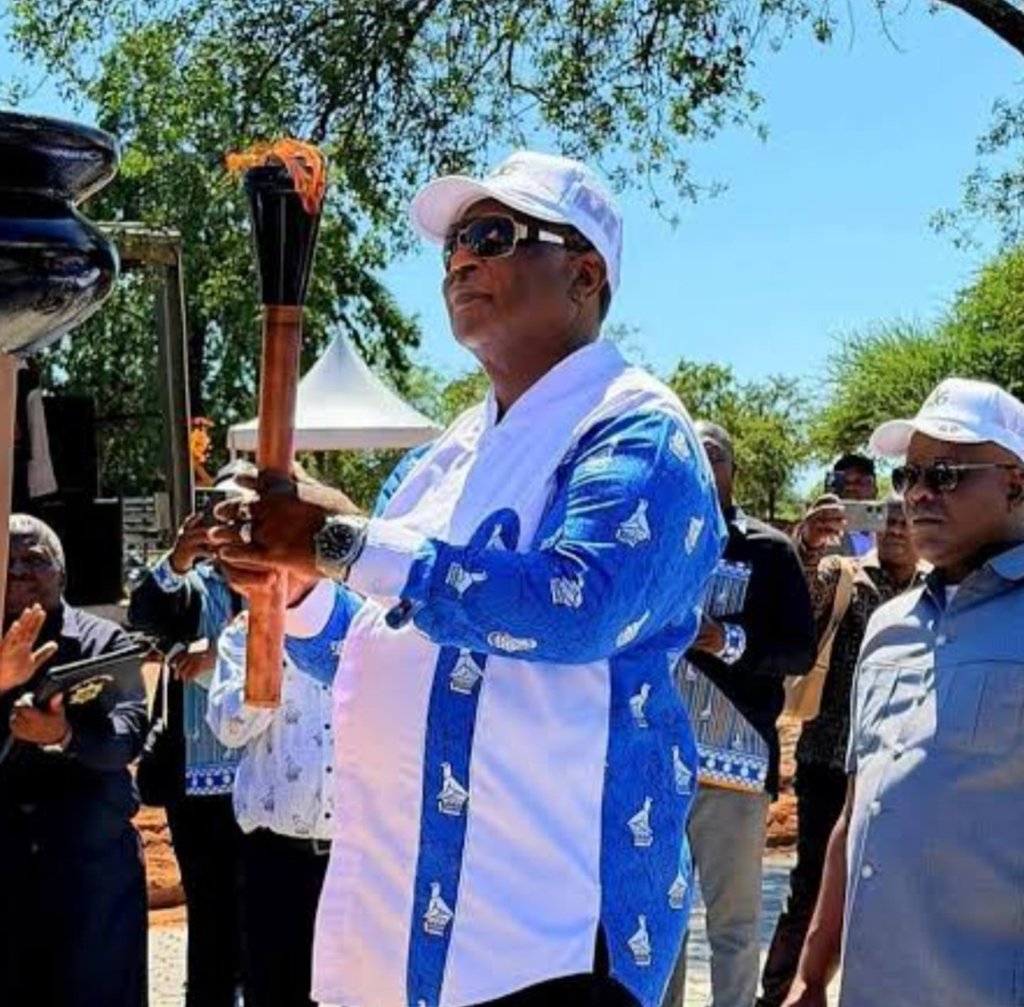
Zimbabwe is once again being dragged into a dangerous political contest where power is placed above principle, and survival above the will of the people. The escalating battle between Vice President Constantino Chiwenga and President Emmerson Mnangagwa is no longer a quiet internal struggle. It has become a defining national crisis, exposing the lengths to which ZANU PF will go to retain control, even at the cost of the very ideals it once claimed to defend.
At the centre of this conflict is Constitutional Amendment Bill Number 3, a deeply controversial attempt to extend Mnangagwa’s rule beyond his constitutional limit of 2028 to 2030. This is not a minor technical adjustment as the ruling party would like Zimbabweans to believe. It is a calculated move to prolong power, reshape the political system, and weaken democratic accountability.
Chiwenga, in a renewed and carefully orchestrated whispering campaign, has begun framing his opposition around the liberation struggle itself. He argues that the war was fought for land and for the principle of one man one vote. This is a powerful narrative, and it is no coincidence that he is invoking it now. By doing so, he is positioning himself as a defender of the original promise of independence, while casting Mnangagwa’s ambitions as a betrayal of that legacy.
But this is not a moral awakening. It is a power struggle. The same system that produced Mnangagwa also produced Chiwenga. What Zimbabweans are witnessing is not a clean alternative emerging, but a fight within an entrenched political elite over who controls the state.
One of the most alarming elements of the proposed amendments is the plan to shift from a direct presidential election system to one where the president is chosen by parliament. On the surface, this is being defended as consistent with practices in other countries. Indeed, dozens of nations use indirect systems, where presidents are selected by legislatures or electoral colleges. Zimbabwe itself once operated under such a framework at independence in 1980, when the prime minister was chosen through parliament and a ceremonial president, Canaan Banana, held office under the Lancaster House constitution.
However, context matters. Zimbabwe’s political history shows that shifts in constitutional design have often been used to concentrate power rather than distribute it. The 1987 constitutional amendment that abolished the prime minister’s role and created an executive presidency under Robert Mugabe fundamentally altered the balance of power. It weakened checks and balances and entrenched authority in one office, laying the foundation for decades of authoritarian rule.
Now, under the guise of reform, ZANU PF seeks to reverse aspects of that system while simultaneously extending Mnangagwa’s stay in office. This contradiction exposes the true intent. It is not about improving governance. It is about reengineering the system in a way that secures power while limiting direct public influence.
The debate over whether this violates the one man one vote principle is not abstract. It goes to the heart of democratic legitimacy. In a direct election system, citizens choose their president themselves. In an indirect system, that power is mediated through elected representatives. While this does not eliminate universal suffrage, it distances citizens from the final decision. In a country where parliament is already heavily controlled and influenced, this shift risks reducing voters to spectators in the most critical political choice.
Equally contentious is the refusal by ZANU PF to subject these changes to a national referendum. The party argues that since term limits are not being removed, a referendum is unnecessary. This argument is disingenuous. Extending a leader’s time in office and fundamentally altering the electoral system are not minor adjustments. They are profound changes that affect the entire nation. To deny citizens a direct say in such decisions is to undermine the very principle of democratic participation.
Opposition groups and civil society have rightly insisted that any extension of Mnangagwa’s rule must be approved by the people. The resistance to a referendum reveals a deeper fear within the ruling establishment. It suggests a lack of confidence that these changes would withstand public scrutiny.
What is unfolding is a struggle not just between Mnangagwa and Chiwenga, but between power and principle. The liberation struggle was fought for dignity, representation, and the right of Zimbabweans to determine their own future. Today, those ideals are being manipulated and reinterpreted to justify the concentration of power in the hands of a few.
Zimbabwe stands at a crossroads. The choices made now will determine whether the country moves toward greater accountability or deeper authoritarianism. Extending power, weakening direct electoral rights, and avoiding public consent are not the actions of a government committed to democracy. They are the actions of a system determined to survive at any cost, even if it means betraying the very people it claims to represent.