DEMOCRACY OR POLITICS? COURT CHALLENGE OVER CONSTITUTIONAL AMENDMENT BILL NO. 3
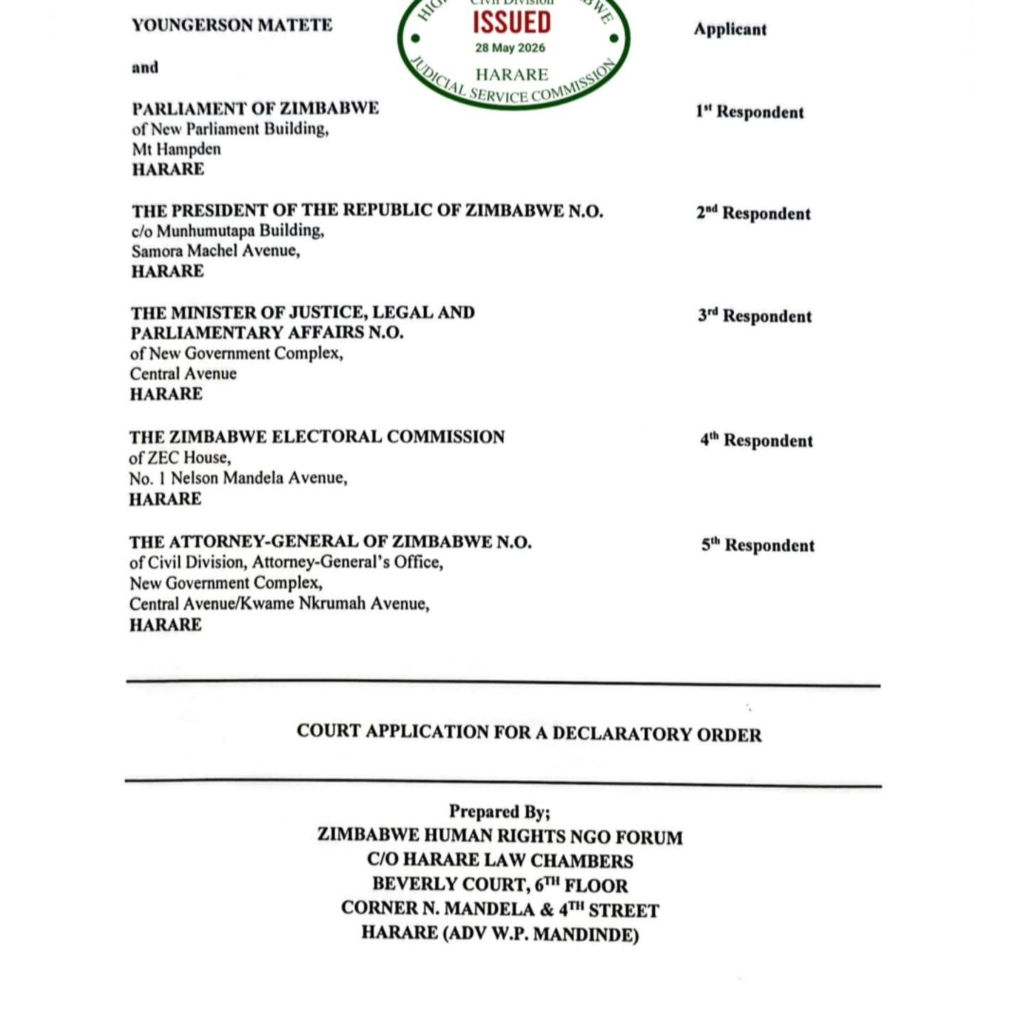
A Zimbabwean political activist, Youngerson Matete, has taken a bold step in challenging the government’s handling of Constitutional Amendment Bill No. 3, arguing that Zimbabweans should have the final say through a national referendum if the proposed changes are approved by Parliament.
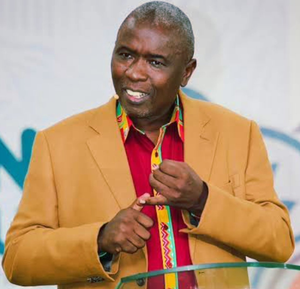
Matete, who is the founder and executive director of Project Vote 263, formerly known as Project Launch 263, filed an application at the High Court seeking a declaratory order on the controversial bill. Project Vote 263 is a non-partisan and youth-led organisation focused on encouraging young Zimbabweans to register to vote and take an active role in democratic and electoral processes.
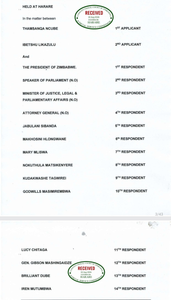
In his court application, Matete listed Parliament, President Emmerson Mnangagwa, Justice Minister Ziyambi Ziyambi, the Zimbabwe Electoral Commission (ZEC), and Attorney-General Virginia Mabiza as respondents.
The legal challenge comes at a time when debate over Constitutional Amendment Bill No. 3 has intensified across the country. While the government insists that the proposed amendments do not require a referendum, critics argue that some of the changes affect protected sections of the Constitution and therefore must be approved directly by the people.
Soon after filing the application, Matete took to social media to explain the reasons behind his court action. He said he was seeking a declaratory order that would compel Parliament and the Ministry of Justice to refer the Constitution of Zimbabwe Amendment Bill No. 3 to the Zimbabwe Electoral Commission for a referendum if it secures the required two-thirds majority in Parliament.
According to Matete, the application is aimed at preventing Parliament from sending the bill to the President for assent before citizens are given an opportunity to vote on it. He argues that some provisions contained in the amendment seek to alter entrenched constitutional clauses that are protected under Section 328 of the Constitution.
In his statement, Matete stressed that the Constitution belongs to the people and that democratic principles and constitutionalism must be protected at all costs. He maintained that allowing significant constitutional changes without direct public approval would undermine the spirit of the country’s supreme law.
The dispute has largely centred on differing interpretations of what Constitutional Amendment Bill No. 3 seeks to achieve. Government officials have repeatedly argued that a referendum is unnecessary because the proposed changes do not remove presidential term limits. Their position is that the amendments mainly deal with issues such as the electoral cycle and other administrative matters, which can be handled through parliamentary processes.
However, opposition parties, constitutional experts, and several civil society organisations have strongly disagreed. They argue that the Constitution clearly provides safeguards for certain provisions and that any attempt to alter them should be subjected to a referendum. For these groups, the issue is not only about the specific amendments being proposed but also about protecting the constitutional principles designed to prevent the abuse of power.
The court challenge is likely to attract significant public interest because it touches on fundamental questions about constitutional governance, the separation of powers, and the role of citizens in shaping the country’s future. It also raises broader concerns about how constitutional changes should be handled in a democratic society.
As the debate continues, many Zimbabweans will be closely watching the courts to see whether Matete’s application succeeds. The outcome could have far-reaching implications, not only for Constitutional Amendment Bill No. 3, but also for the future interpretation of constitutional protections and the extent of public participation in major national decisions.


People must stop acting like every court application is heroic. Anyone can file papers. The important thing is whether the law actually supports the argument.
That’s true, but citizens also have a right to challenge government decisions through the courts. That’s how constitutional democracy is supposed to work.
This is exactly how constitutional matters should be handled. If there is genuine disagreement about whether a referendum is needed, then let the courts decide. That is far better than politicians shouting at each other on television every night.
What interests me is not even the outcome of the case itself, but the principle behind it. Constitutions are supposed to act as a safeguard against the concentration of power. Whenever there is uncertainty about how constitutional changes should be approved, it makes sense for courts to provide clarity. If the courts rule that Parliament alone is sufficient, then at least the issue is settled through legal interpretation. If they rule that a referendum is required, then citizens gain a direct voice. Either way, transparency is important.