THE CONSTITUTION IS NOT A LOYALTY TEST FOR THE 2030 AGENDA
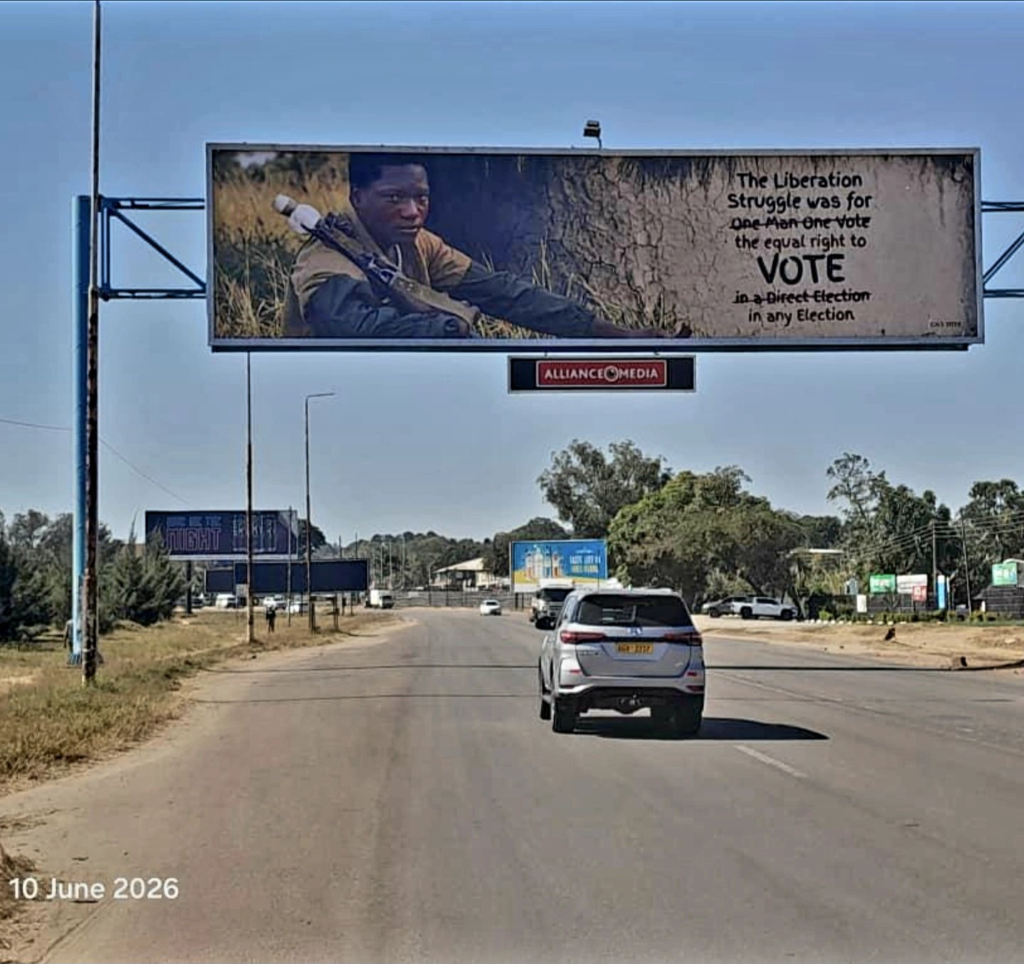
Supporters of President Emmerson Mnangagwa’s controversial 2030 agenda have increasingly shifted their campaign from political slogans to constitutional arguments. Billboards erected across parts of Zimbabwe now claim that extending the term of office for Members of Parliament, local authorities and even the President would not violate the Constitution because there is a difference between a term limit and a term length.
At first glance, the argument appears sophisticated. Its supporters point to specific constitutional provisions and insist that critics have misunderstood the law. They argue that Section 328 only prevents an incumbent from benefiting from amendments to term limits, not amendments to the length of a term. According to this interpretation, extending the duration of an existing term would not necessarily trigger the constitutional prohibition.
Their case relies heavily on the wording of Section 328(7), which states that amendments to a term-limit provision cannot be used to extend the time a current office holder remains in office. They argue that because the Constitution specifically mentions “term-limit provisions,” it does not apply to amendments that merely alter the length of a term.
While this may appear convincing as a legal argument, it misses a much larger constitutional reality.
The Constitution was never intended to be treated as a collection of isolated words that can be manipulated to achieve a predetermined political outcome. Constitutions are built around principles, values and democratic safeguards. They are designed not only to regulate power but also to prevent those in power from changing the rules for their own benefit.
The central question therefore is not whether lawyers can identify a technical distinction between term length and term limits. The central question is whether extending the tenure of elected officials without returning to the people for a fresh mandate respects the spirit of constitutional democracy.
Zimbabweans voted for representatives on the understanding that their terms would end at a specified time. They voted under a constitutional framework that clearly establishes regular elections as the basis of democratic accountability. Any attempt to postpone that accountability inevitably raises legitimate concerns, regardless of how creatively legal language is interpreted.
The danger of the current debate is that it risks turning constitutional interpretation into a political weapon. Every government seeking to extend its stay in office can find lawyers willing to argue that a particular clause allows it. Yet constitutionalism is not simply about what can be justified through technical readings. It is about protecting citizens from the concentration and abuse of power.
What is striking about the 2030 campaign is that it has never emerged from popular demand. Ordinary Zimbabweans are not marching in the streets demanding longer terms for politicians. They are demanding jobs, functioning hospitals, better schools, reliable electricity and economic opportunities. The push for term extensions is largely being driven by political elites whose interests are directly affected by the outcome.
This is why the debate cannot be reduced to a single subsection of the Constitution. The broader issue is whether Zimbabwe’s leaders are strengthening democratic institutions or weakening them.
A constitution should never become an instrument for avoiding elections. It should remain a safeguard that guarantees citizens the right to regularly renew, reject or replace those who govern them.
The real test is not whether a lawyer can defend the 2030 project in a legal argument. The real test is whether the people of Zimbabwe believe it serves the national interest. So far, there is little evidence that they do.




One thing I’ve noticed is that this discussion has moved far beyond Parliament. It’s now happening in churches, universities, workplaces, commuter omnibuses and even family WhatsApp groups. Whether people understand every constitutional section or not, they understand the basic democratic idea that elections allow citizens to renew or withdraw their support for leaders. Once there is even a perception that elections could be delayed or political terms extended, many people naturally become uneasy. That doesn’t automatically make one legal interpretation correct and another wrong, but it does explain why the issue has attracted so much public attention. Trust is just as important as technical legal arguments in any constitutional democracy.
The biggest problem is that people are debating legal wording while ordinary families are debating how to put food on the table. That’s the real Zimbabwe.
This article ignores one thing. Constitutions are amended all over the world. The question is whether the correct legal process is followed.
True, but not every constitutional amendment has the same political consequences. Some are far more significant than others.
What worries me isn’t even the legal argument itself. It’s the motivation behind it. If politicians spent half as much energy fixing hospitals, creating jobs and improving service delivery as they do debating how long they should remain in office, the country would probably be in a much better position. Citizens naturally become suspicious when constitutional discussions seem to benefit leaders more than the public. That’s why many people are asking difficult questions instead of simply accepting the legal explanations being offered.