ZANU PF CAN CONTROL THE STATE, BUT IT CANNOT PUT A BORDER AROUND THE STRUGGLE FOR DEMOCRACY

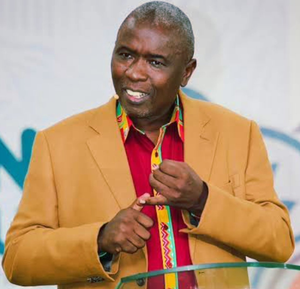
The meeting between Zimbabwean opposition veteran Job Sikhala and Mozambique’s Venâncio Mondlane in Maputo carries a message that ZANU PF should not ignore: the struggle for democratic accountability in Southern Africa is increasingly crossing borders, exchanging ideas and building relationships that governments cannot easily contain.
Sikhala and Mondlane are products of different countries, but their political experiences have obvious similarities. Both have confronted powerful ruling establishments. Both have built political identities around challenging systems they regard as authoritarian. Both understand the personal cost that can accompany opposition politics in countries where ruling parties have become deeply embedded within state institutions.
Their decision to explore cooperation therefore deserves attention.
For Zimbabweans, Sikhala’s story is particularly familiar. He has spent decades in opposition politics, endured repeated arrests and spent 595 days in detention between 2022 and 2024. Yet after years of pressure, imprisonment and political setbacks, he remains active.
That persistence exposes an uncomfortable truth for ZANU PF.
You can arrest an opponent, but you cannot arrest an idea.
You can dominate Parliament, but you cannot legislate public frustration out of existence.
You can change constitutional provisions, but you cannot command citizens to believe that those changes are democratic.
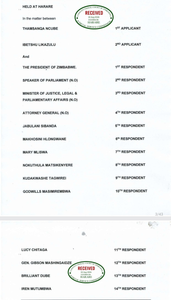
This is particularly relevant following Constitutional Amendment No. 3. At precisely the moment when Zimbabwe needs stronger democratic institutions and greater confidence in elections, ZANU PF has supported constitutional changes that critics believe consolidate political power and weaken the ability of citizens to determine their political future.
The ruling party calls it stability.
Many Zimbabweans see something very different: a political establishment increasingly determined to protect itself from the uncertainty that genuine democracy naturally brings.
After more than four decades in power, ZANU PF should not need constitutional engineering to prove that Zimbabweans still want it to govern. If the party genuinely commands overwhelming national support, then it should welcome regular elections, strong opposition, independent institutions and unrestricted democratic competition.
A popular government does not need protection from voters.
It needs their votes.
This is why the growing regional conversation between activists matters. Zimbabwe’s struggle is not happening in isolation. Across Africa, younger generations are increasingly questioning political systems in which liberation history is repeatedly used as justification for permanent political dominance.
Liberation movements deserve their place in history. But liberation was supposed to free citizens, not create political parties that behave as permanent owners of the countries they helped liberate.
Zimbabwe belongs to Zimbabweans.
It does not belong to ZANU PF.
And independence did not replace colonial domination so that another political establishment could eventually treat state power as an inheritance.
Mondlane’s political rise in Mozambique demonstrates how quickly public dissatisfaction can produce new political movements. His emergence from activist and opposition politics into a major national figure shows why entrenched ruling parties should never mistake institutional control for permanent public consent.
Sikhala and Mondlane reportedly discussed peaceful democratic struggle and the importance of building networks beyond their respective countries. That approach matters because Zimbabwe does not need violence. Violence would provide the perfect excuse for repression while ordinary citizens would carry the consequences.
The strongest challenge to authoritarian politics is disciplined, peaceful and organised citizenship.
It is workers who understand their rights. Students who refuse political intimidation. Churches willing to speak against injustice. Lawyers defending constitutionalism. Journalists exposing abuse. Civil society organisations educating communities. Citizens peacefully demanding that those exercising public authority remain accountable.
That is far more difficult to defeat than one politician.
ZANU PF has spent decades fighting political opponents as though removing individuals would remove the demand for change. Morgan Tsvangirai died, but the demand for democratic reform survived. Opposition parties fragmented, yet dissatisfaction survived. Activists were arrested, but criticism survived.
Because the struggle was never one person.
The real struggle is against a political culture where the party and the state become dangerously difficult to separate.
Sikhala and Mondlane must also understand that defeating entrenched ruling parties is not enough. Africa does not need new strongmen replacing old strongmen. Any democratic movement worthy of public support must promise something fundamentally different: constitutional government, peaceful transfers of power, independent institutions and leaders who understand that public office has an expiry date.
That is the standard Zimbabwe must demand from both ZANU PF and those seeking to replace it.
CAB3 has made that conversation even more urgent.
Zimbabwe cannot continue changing democratic rules whenever political circumstances become uncomfortable for those governing.
ZANU PF may currently possess the machinery of government, parliamentary influence and enormous institutional power.
But history repeatedly teaches political establishments the same lesson.
Governments can control institutions for a long time.
They cannot permanently control what millions of people believe.
And when citizens across borders begin exchanging ideas, building democratic networks and discovering that their struggles are connected, even the most confident ruling parties eventually have to confront the one force they can never constitutionally own:
the people.