MONEY, DRUGS AND MILLIONS: THE SCANDAL NOW KNOCKING AT MNANGAGWA’S FAMILY DOOR
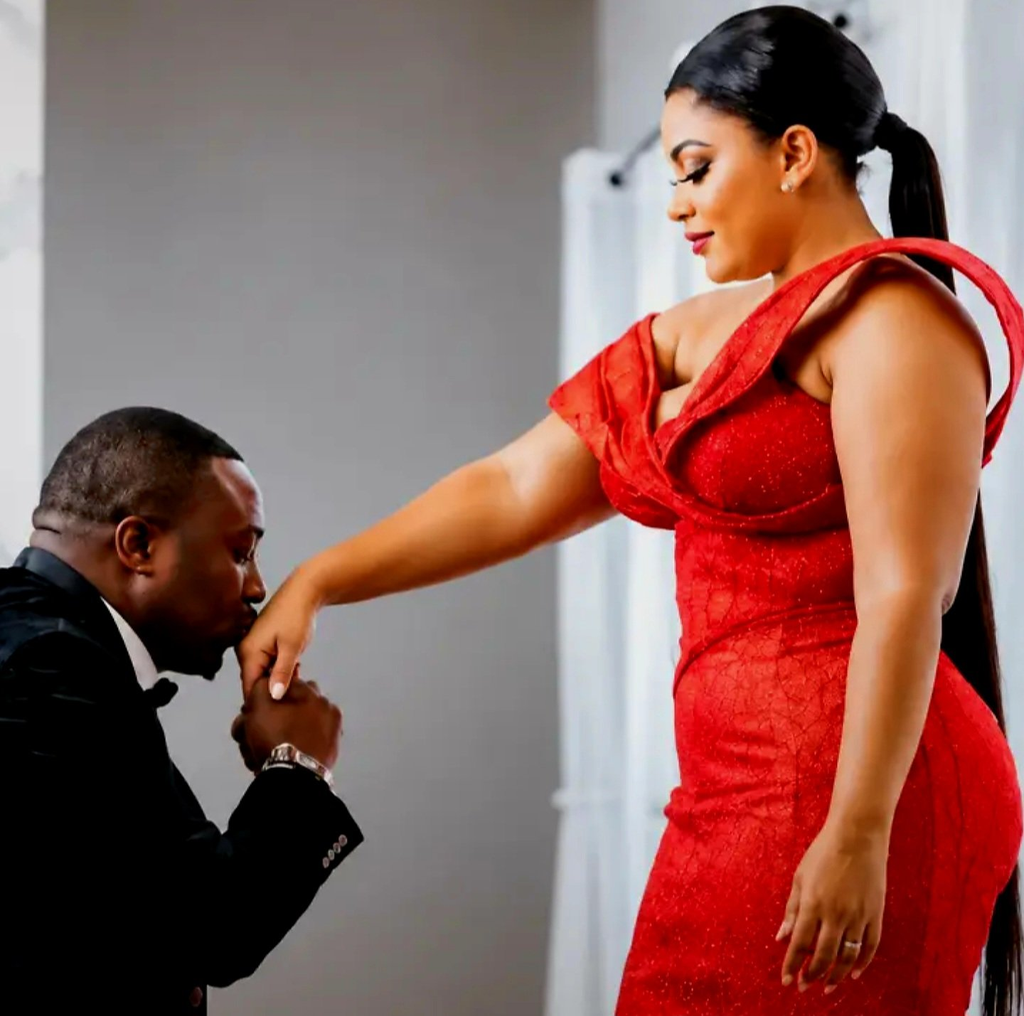
Zimbabwe is watching an extraordinary criminal case unfold around people connected to President Emmerson Mnangagwa’s family, bringing together allegations of narcotics possession, money laundering, multimillion-dollar property acquisitions, luxury vehicles, family warfare and the President’s son Collins Mnangagwa.
At the centre of the case is Kelsea Tadiwa Tafirenyika, reported to be Collins’ 22-year-old second wife, together with her mother Amina Jassinta Jessub Arab, sister Dyonne Tanaka Tafirenyika and relative Noreen Jessub.
The allegations against them are staggering.
But beyond the courtroom drama lies a question Zimbabwe cannot afford to ignore: where did all this money allegedly come from?
Prosecutors accuse Kelsea of building an empire worth approximately US$9.35 million using money allegedly taken from Collins. The assets reportedly include prime residential properties and some of the world’s most expensive vehicles.
The prosecution case reportedly identifies two Lamborghinis, two Bentleys, a Rolls-Royce, Jaguar and Land Rover among the vehicles connected to the alleged transactions. Kelsea is further accused of acquiring numerous properties in affluent Harare suburbs such as Borrowdale and Glen Lorne, together with properties outside Zimbabwe, including in South Africa and Dubai.
Police have reportedly begun recovering assets which investigators believe were placed in the names of relatives.
These remain allegations which Kelsea and the other accused are entitled to challenge before the courts. Guilt must ultimately be determined through due process.
Yet the political implications cannot simply be wished away.
If prosecutors are alleging that millions were taken from Collins Mnangagwa, then Zimbabweans are entitled to ask questions about the source of those millions in the first place.
That question becomes particularly important because Collins is not an ordinary private citizen existing completely outside Zimbabwe’s political establishment. He is the son of the President.
If the state intends to follow the money, it cannot conveniently stop following it when the trail reaches the gates of the First Family.
The criminal saga reportedly began after detectives raided Kelsea’s Greystone Park residence in Harare on 4 August. Police allegedly recovered pharmaceutical narcotics including pethidine and morphine as well as cannabis.
Kelsea was arrested and subsequently obtained bail, only to face further arrest in connection with fraud and money laundering allegations.
Then the drama moved hundreds of kilometres to Bulawayo.
As police investigations intensified in Harare, Kelsea’s mother Amina, sister Dyonne and relative Noreen reportedly travelled to Bulawayo and stayed at a guest house in Ilanda.
Police subsequently arrested the three women there.
According to the prosecution case, detectives recovered cocaine from rooms associated with Amina and Noreen. In Dyonne’s room, police allege they discovered cocaine, crystal methamphetamine and US$53 055 in cash.
The state has reportedly described the cash as suspected proceeds of crime and opposed bail.
Again, these are allegations before the courts, not findings of guilt.
But what happened around the arrests makes the story even more extraordinary.
Reports claim arrangements had been made for the women to leave Zimbabwe aboard a privately chartered aircraft. Collins was reportedly connected to arrangements for the flight, which was expected to leave through Joshua Mqabuko Nkomo International Airport.
The women never boarded it.
Security authorities arrested them at their accommodation before the reported departure, and the aircraft eventually left without them.
Reports further claim Collins was in Dubai undergoing rehabilitation related to drug problems. Claims surrounding his personal circumstances should be treated cautiously unless established through reliable evidence or acknowledged by those concerned.
There are also reports that First Lady Auxillia Mnangagwa became involved after becoming concerned about her son’s relationship with Kelsea. Some accounts claim she believed Kelsea introduced Collins to drugs and subsequently exploited him financially while he was vulnerable.
Those claims are explosive, but they too require evidence.
What cannot be ignored, however, is the scale of the financial allegations now before Zimbabweans.
This is where the scandal becomes bigger than a troubled marriage.
Zimbabwe is a country where ordinary workers struggle to earn several hundred United States dollars a month. Hospitals repeatedly battle shortages. Pensioners struggle to survive. Young graduates leave the country searching for opportunities.
Against that background, allegations involving nearly US$10 million, Lamborghinis, Bentleys, Rolls-Royces, prime Harare properties, Dubai real estate and private aircraft inevitably raise questions about wealth and power.
If millions were stolen, as alleged, whose millions were they?
How were they accumulated?
Were they declared?
What businesses generated them?
Were taxes paid?
Can every dollar be traced to legitimate commercial activity?
Those questions should not be regarded as attacks on Collins Mnangagwa. They are precisely the questions competent investigators should ask whenever the state alleges that millions of dollars have moved through a suspected money-laundering operation.
The law cannot have one standard for people accused of receiving or laundering money and another standard for politically connected people alleged to have been the source of that money.
There is another test for the authorities.
Zimbabweans must be allowed to see whether this investigation proceeds independently, transparently and without interference from powerful political interests.
The accused women deserve due process. They must not be convicted through newspaper headlines or political gossip.
But proximity to the First Family must equally not create areas where investigators suddenly lose their curiosity.
For years, Zimbabweans have watched spectacular displays of wealth emerge around politically connected individuals while millions of citizens endure economic hardship. That has created deep public suspicion about the relationship between political power and private wealth.
This case provides the authorities with an opportunity to demonstrate that nobody stands above scrutiny.
Investigate the drugs.
Investigate the alleged money laundering.
Investigate the properties.
Investigate the vehicles.
Investigate the cash.
And crucially, follow the money all the way to its original source.
If the nearly US$10 million allegedly involved came from legitimate business activities, establishing that should strengthen the credibility of the investigation rather than weaken it.
But Zimbabwe cannot have an investigation that examines how Kelsea allegedly spent millions without asking how those millions came into existence.
The scandal may have started as an extraordinary domestic dispute involving Collins Mnangagwa and his reported wife.
It has now become something much bigger.
When allegations involve narcotics, millions of dollars, dozens of properties, luxury supercars, private aircraft and people connected to Zimbabwe’s most powerful political family, this ceases to be merely family drama.
It becomes a test of the state itself.
Zimbabweans should therefore watch not only who gets arrested.
They should watch where investigators stop asking questions.
Behind all the jokes, there is a very serious institutional test here. The authorities need to show that investigations do not become less curious when politically powerful people appear somewhere in the financial chain. Equally, they shouldn’t persecute anyone merely because of their surname. Follow the evidence objectively and let the facts determine where the investigation goes.
People are laughing about the cars, but if the prosecution case is accurate, the property transactions could reveal much more than the vehicles. Properties leave records. Transfers leave records. Companies leave records. Investigators should be able to reconstruct how the alleged purchases were funded and who ultimately provided the money.
You seem to overstate the notion that every advanced degree obtained by Zimbabwean leaders is merely a ploy for personal gain. By suggesting that academic credentials are just a façade for power and status, you risk dismissing the genuine academic effort and learning that might be taking place. It would be helpful if you explored the possibility that some of these leaders may truly value education as a tool for better governance, rather than assuming every PhD is bought solely for image.