WHEN A GOVERNMENT FEARS THE BALLOT, DEMOCRACY IS THE FIRST CASUALTY
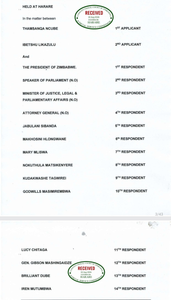
The most dangerous attacks on democracy do not always arrive through tanks on the streets or dramatic declarations of martial law. Sometimes they come wrapped in legal language, passed through Parliament, signed into law, and presented as ordinary constitutional reform. That is precisely why Constitutional Amendment No. 3 should alarm every Zimbabwean.
This is not simply another amendment to the Constitution. It is a political turning point that fundamentally changes the relationship between citizens and the state. It extends the lifespan of those already in office, alters key constitutional principles, and weakens one of the most important pillars of democracy: the ability of the people to regularly hold their leaders accountable through elections.
ZANU PF insists the amendment is necessary to promote stability, policy continuity, and long term national development. But stability achieved by reducing democratic accountability is not genuine stability. It is the stability of concentrated power, where leaders become increasingly insulated from the people they are meant to serve.
If elections are inconvenient for those in government, the solution is not to postpone or dilute them. The solution is to govern in a manner that earns public confidence when election day arrives.
A government that believes it enjoys overwhelming public support should never fear returning to the electorate. Democracy demands regular renewal of political legitimacy. When constitutional rules are altered in ways that prolong political authority instead of strengthening public participation, citizens have every right to question whose interests are really being protected.
Zimbabwe’s Constitution was never designed to protect politicians from voters. It was designed to protect voters from politicians.
That principle now appears to be under serious threat.
The Constitution adopted in 2013 was celebrated because it represented a new social contract between the government and the people. It placed limits on executive authority, strengthened constitutional safeguards, and reflected the aspirations of millions of Zimbabweans who wanted institutions that were stronger than individuals.
CAB3 moves the country in the opposite direction.
Instead of reinforcing constitutional limits, it expands political power. Instead of strengthening democratic participation, it weakens it. Instead of encouraging greater accountability, it creates greater distance between leaders and the citizens whose authority they exercise.
Supporters argue that longer terms will allow governments to complete development projects without constant political distractions. That argument ignores Zimbabwe’s own history.
The country has experienced decades under the same governing party. If extended time in office automatically produced prosperity, Zimbabwe would not be battling economic instability, widespread unemployment, deteriorating public services, corruption scandals, and the continued migration of skilled professionals seeking better opportunities abroad.
Development is not measured by the number of years leaders remain in office. It is measured by the quality of governance, transparency, accountability, and respect for democratic institutions.
Perhaps the most significant development since CAB3 became law is the growing coalition resisting it.
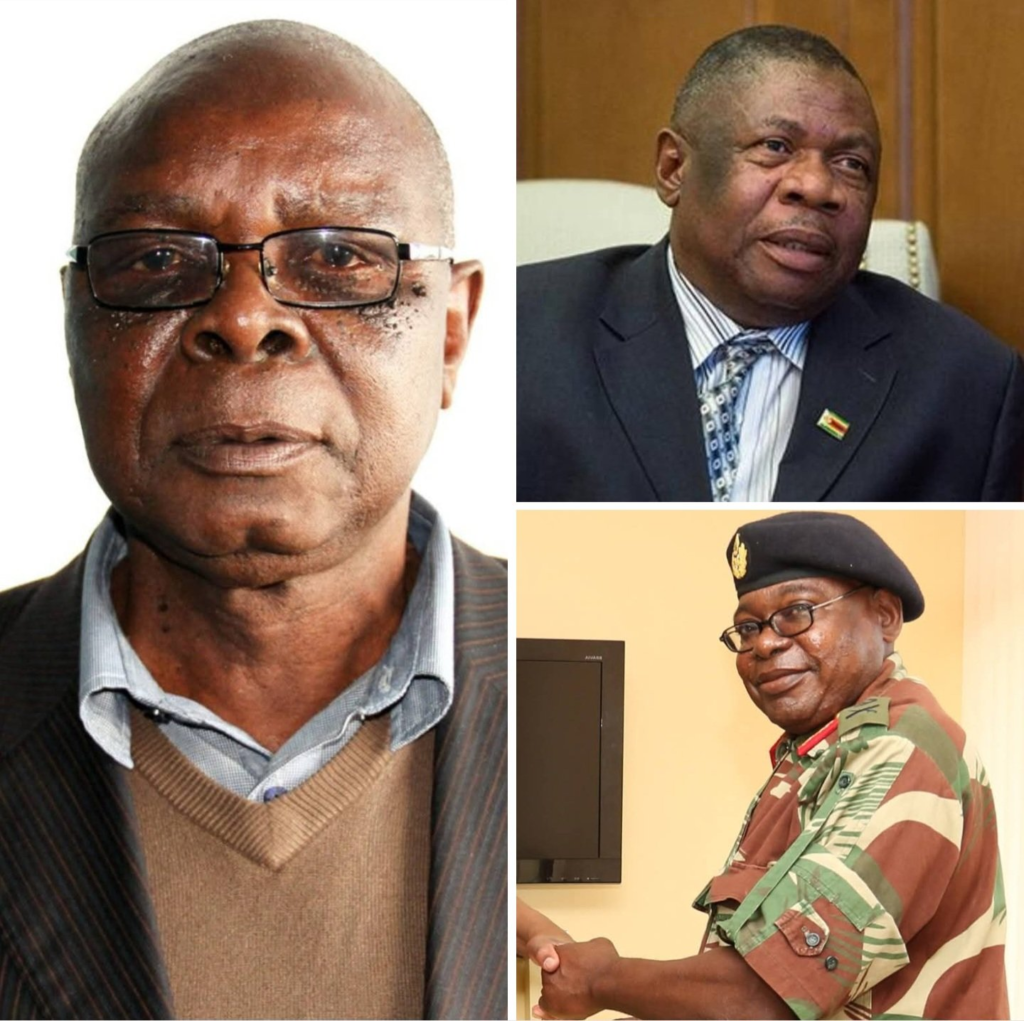
Opposition to the amendment is no longer confined to opposition political parties. Former senior military commanders, liberation war veterans, constitutional lawyers, churches, students, civic organisations, and ordinary citizens are increasingly speaking with one voice. Many of these individuals have very different political backgrounds and have disagreed on countless issues over the years. Yet they now share a common concern that Zimbabwe’s constitutional democracy is being steadily weakened.
When even respected figures who once formed part of the political and security establishment begin warning that constitutional principles are under attack, dismissing every critic as an enemy of the state becomes increasingly difficult.
This should never have been reduced to a battle between ZANU PF and the opposition.
It is a national conversation about whether constitutional rules should protect citizens equally or whether they can be rewritten whenever they become inconvenient for those holding political power.
History offers an important warning. Democracies rarely collapse overnight. They are gradually weakened through small constitutional changes, reduced public participation, weakened oversight institutions, and the growing normalisation of executive dominance. Each individual change may appear manageable on its own, but together they fundamentally transform the political system.
Zimbabwe now stands at one of those defining moments.
The issue is bigger than President Emmerson Mnangagwa. It is bigger than ZANU PF. It is even bigger than the next election.
The real question is what kind of country Zimbabwe wants to become.
Will it remain a constitutional democracy where leaders remain accountable to citizens through regular elections and constitutional limits? Or will it become a country where constitutions are increasingly adjusted to accommodate the political ambitions of those already in office?
Future generations will inherit whatever answer Zimbabwe chooses today.
That is why CAB3 must continue to face peaceful, lawful, and determined opposition. Defending constitutional democracy is not an act of disloyalty. It is an act of patriotism. No political party should ever become more important than the Constitution, and no leader should ever become greater than the people from whom all democratic authority ultimately flows.